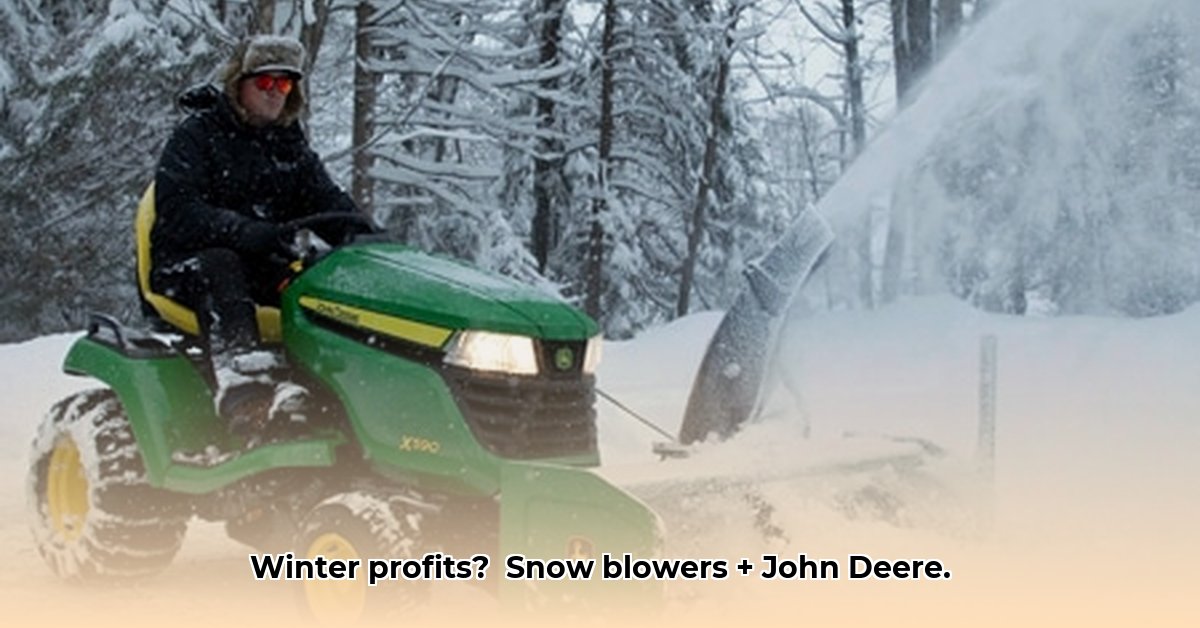
Snow Blowers for John Deere Lawn Tractors: Turning Winter into Extra Cash
Winter's arrival doesn't mean your John Deere tractor needs to sit idle. This guide shows you how to transform your tractor into a profitable snow-clearing machine, maximizing your investment and boosting your income. We'll cover choosing the right snow blower attachment, safe operation, maintenance, and the economic and environmental considerations. Get ready to clear the snow and your path to extra winter profits! For more information on 3-point hitch snow blowers, check out this helpful resource: 3-point snow blowers.
Choosing the Right Snow Blower Attachment for Your John Deere Tractor
Selecting the correct snow blower is paramount. Consider your tractor's capabilities and your local snowfall. Key factors include tractor size, PTO (Power Take-Off) horsepower, and expected snow conditions.
- Tractor Size: Larger tractors generally handle larger, more powerful snow blowers. Ensure compatibility with your specific John Deere model by consulting your owner's manual.
- PTO Horsepower: Higher horsepower means more snow-blowing power. Light snowfall requires less powerful blowers than heavy, frequent snowfall.
- Snow Conditions: Light, fluffy snow is easier to manage than heavy, wet snow. Consider your area's average snowfall to determine the appropriate blower size and power.
Matching the snow blower to your tractor and typical snowfall ensures efficient and safe snow removal. Refer to online resources (John Deere website, etc.) or your local John Deere dealer for visual aids and compatibility charts.
Safe Operation and Maintenance: Keeping Yourself and Your Equipment Safe
Safety is paramount. Prioritize careful, methodical operation. Always perform these pre-operation checks:
- Pre-flight Inspection: Thoroughly inspect the snow blower for any damage, focusing on blades, chute, and connections. Check bolts and moving parts for security.
- Lubrication: Ensure all moving parts are well-lubricated to prevent wear and tear and ensure smooth operation.
- Fluid Levels: Verify all fluid levels in your tractor according to the owner's manual.
- Safety Briefing: Familiarize yourself with all safety features on both your tractor and the snow blower attachment.
During snow clearing, maintain a slow and steady pace.
- Controlled Operation: Avoid jerky movements, especially on slippery surfaces, to prevent destabilization.
- Adaptive Speed: Reduce speed further in icy conditions or reduced visibility.
- Discharge Direction: Never direct the discharged snow towards buildings, vehicles, or people.
- Situational Awareness: Maintain constant awareness of your surroundings, watching for obstacles and hazards.
Routine maintenance is essential for equipment longevity:
- Regular Lubrication: Regularly lubricate moving parts to extend lifespan and maintain optimal performance.
- Sharp Blades: Keep blades sharp for efficient snow removal and reduced strain on your tractor.
- Proper Storage: Store the snow blower properly during the off-season to protect it from the elements and prolong its life.
The Financial and Environmental Picture: Is it Worth It?
Using your John Deere tractor for snow removal can offer financial advantages compared to purchasing a standalone snow blower or hiring services. You're leveraging an existing investment, potentially reducing overall costs. It also extends equipment lifespan, potentially reducing the environmental impact from manufacturing new equipment.
However, consider potential drawbacks:
- Higher initial investment in the snow blower attachment.
- Increased maintenance and repair costs.
- Potential for increased wear and tear on the tractor due to winter conditions.
While the environmental benefits of extended equipment use are likely, further research is needed for conclusive quantification. This approach minimizes the need for additional resources (manufacturing, transportation) but increases the impact of fuel consumption.
How Does it Compare to Other Options?
Let's compare the John Deere tractor/snow blower approach to alternatives:
| Method | Initial Cost | Operating Cost | Environmental Impact |
|---|---|---|---|
| Standalone Snow Blower | High | Moderate | Moderate |
| Professional Snow Removal | High | High | Variable |
| John Deere Tractor/Attachment | Moderate (lower) | Moderate to Low | Low (potentially) |
The optimal choice depends on individual needs, snow volume, property size, and budget.
Important Note: This analysis is based on current understanding. Further research is needed to fully quantify the economic and environmental comparisons. Prioritize safety when operating machinery.
Key Takeaways: Maximizing Your Winter Profits
- Adapting your John Deere tractor for snow removal offers substantial potential for increased winter income.
- Careful selection of a compatible snow blower attachment is crucial for efficient and safe operation.
- Regular maintenance and safe operating practices extend equipment lifespan and minimize risks.
- While initial costs exist, using your existing tractor can provide significant cost savings compared to alternatives, particularly for landowners already owning John Deere equipment.
Remember, always consult your John Deere owner's manual and follow all safety guidelines for safe and efficient snow removal.